
You have probably pictured an African safari as open plains, dry grass, and dust. The Okavango Delta is none of those things. It is a water wilderness in the middle of a desert — and once you understand what that means, it is very hard to go anywhere else.
1. It is unlike any other safari on Earth
Most safaris happen on land. The Okavango happens on water. A flood that begins as rain in the Angolan highlands travels over 1,000 kilometres south, fans out across the Kalahari sands, and creates a 15,000-square-kilometre maze of channels, islands and lagoons. There is nowhere else on the planet where this happens — a river that never reaches the sea, dying instead in the desert and giving life to everything around it.
2. You will see the Big Five
Elephant, lion, leopard, buffalo, and the recently reintroduced rhino all live in and around the Delta. The Moremi Game Reserve, at the heart of the ecosystem, has one of the highest concentrations of wildlife in Africa. For a first-time safari goer, this is as good as it gets — the kind of sightings that take years to find elsewhere can happen here on your first morning.
3. A mokoro ride is something you will never forget
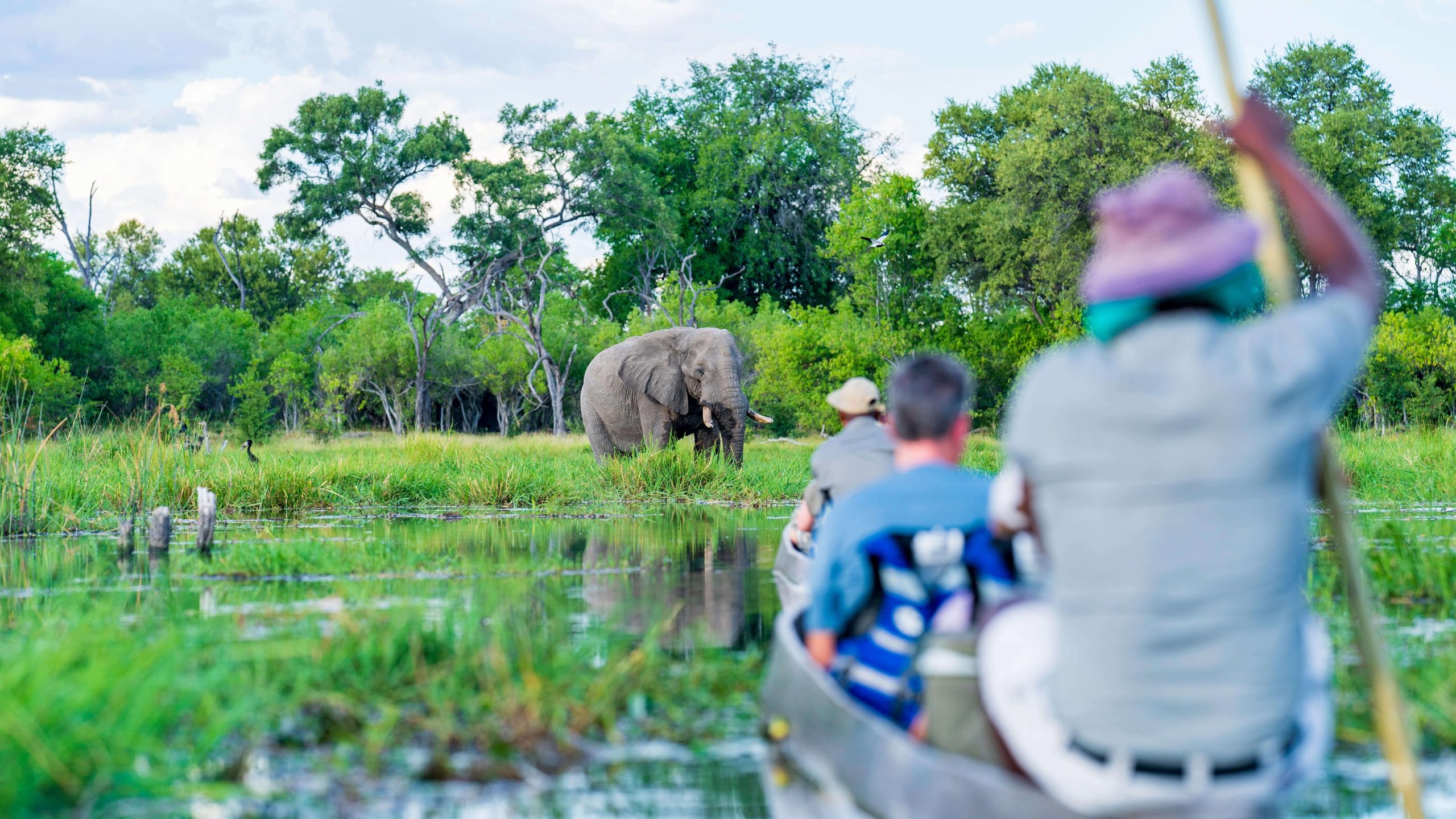
A mokoro is a traditional dugout canoe, poled silently through shallow waterways by a guide from the local community. There is no engine, no noise — just the sound of water parting around the hull and a fish eagle calling somewhere in the reeds. You sit inches above the surface, close enough to watch a hippo exhale or a malachite kingfisher land on a papyrus stem. No game drive compares to it.

4. The timing of the flood is extraordinary
The Delta floods in winter, the dry season, which is the opposite of what you might expect. The water arrives between June and August, turning a parched landscape into a glittering labyrinth almost overnight. This means you get the best of both worlds: dry-season skies with no clouds or rain, and a water wilderness to explore. The shoulder season in May and June is particularly special, when the flood is rising and the crowds have not yet arrived.
5. You fly in by light aircraft
Because much of the Delta is an inaccessible wetland, the most remote camps can only be reached by small plane. Your transfer from Maun takes between 30 and 60 minutes, during which the town’s dusty roads give way to an endless shimmer of water and papyrus below. From your vantage point, you can see the “claw-like” shape of the Delta from above. As the plane descends, you land on a remote bush airstrip and step out into wilderness. For a first-time safari goer, that flight alone is worth the trip.
6. The birdlife is world class
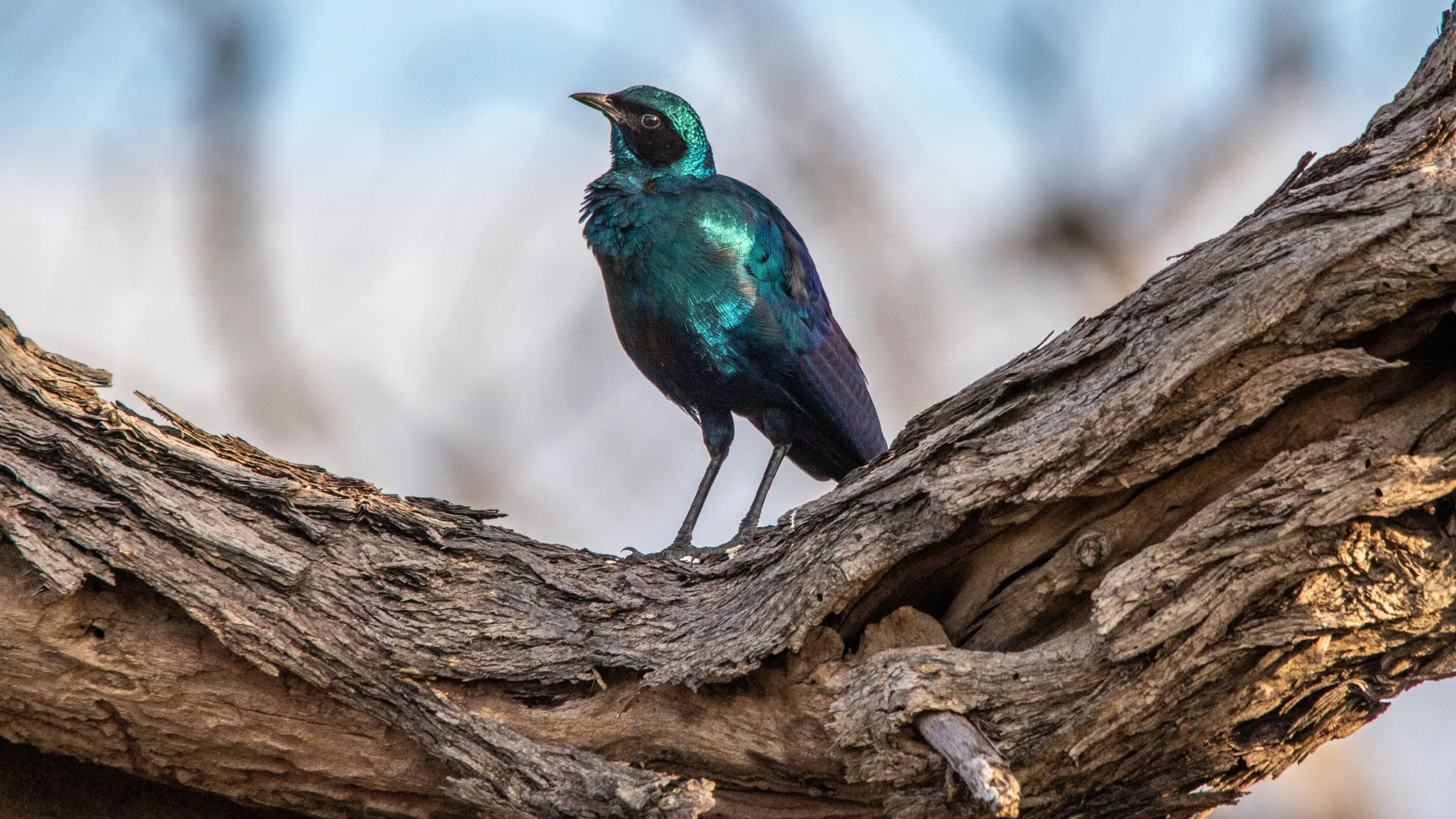
Over 400 species of bird have been recorded in the Delta. For a first-time visitor, even someone who has never owned a pair of binoculars, the birdlife here is impossible to ignore. African fish eagles perch on dead trees above the water. Saddle-billed storks wade through the shallows. At night, Pel’s Fishing Owl — one of the most sought-after birds in Africa — hunts the channels in near silence. Birdwatchers travel from across the world specifically for this.
7. It is one of the least crowded safaris in Africa
Botswana made a deliberate decision decades ago: fewer tourists, higher quality. Each private concession in the Delta is limited to a small number of beds—often no more than 12 to 20 in total. This ensures you share the wilderness with almost nobody, with no convoys of vehicles at a lion sighting. Beyond the privacy, these private concessions offer a level of freedom you won’t find in many other national parks: the ability to head off-road. Whether following a leopard through the brush or a wild dog hunt across the plains, the experience is entirely yours.
8. Navigating “Water” vs. “Land” Camps
One of the most important things to understand is the difference between “Water Camps” and “Land Camps.” Some lodges are situated in the permanent deep-water channels (perfect for boating and mokoros year-round), while others are on the seasonal floodplains (best for big-game drives and lion sightings). A robust itinerary usually combines both to give you the full spectrum of the Delta.
9. Walking safaris connect you to the land
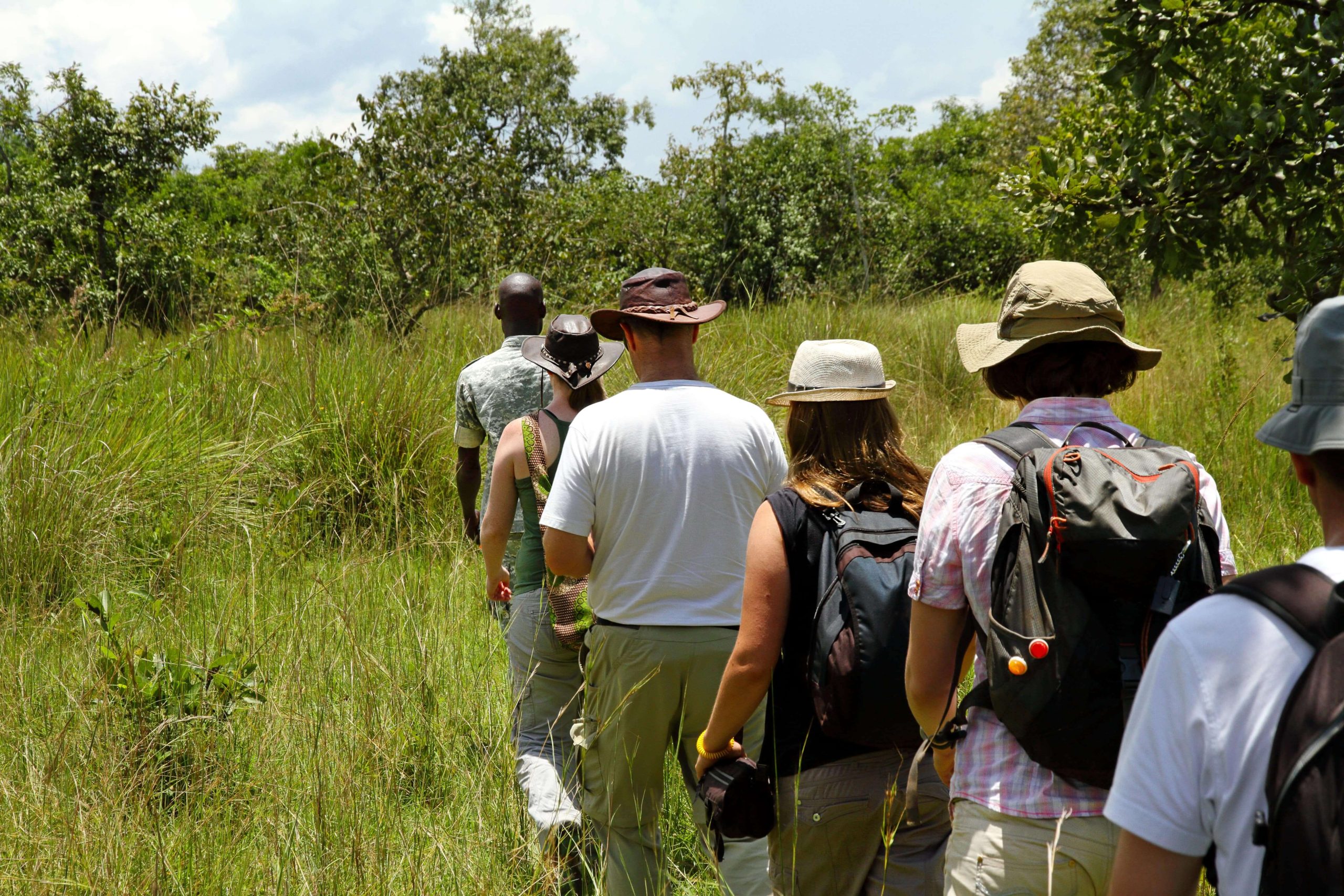
Getting out of a vehicle and onto the ground changes everything. On a guided walking safari in the Delta, you learn to read animal tracks, identify plants used for centuries by the local Batawana people, and understand the ecosystem at a scale no game drive can offer. It is slower, quieter, and often more memorable than any big-game sighting.
10. Your visit directly supports conservation
Tourism in the Delta is the engine of conservation. A portion of every booking flows back to the Batawana community through land-lease agreements and local employment. The camps themselves are designed to “leave no trace”, with no permanent structures. When a concession rotates, the bush reclaims it completely. Visiting here is one of the most meaningful ways to protect a wild place.
Final thoughts
Most first-time safari goers come back saying the same thing: they did not expect to feel so small, so quiet, so far from everything. The Okavango Delta achieves this better than anywhere else on Earth. There are no roads in, no towns nearby, and no light pollution at night. Just water, animals, sky, and the sound of a wilderness that existed long before we did. If you are planning your first safari, make it this one.